School District Leaders
How Does the Language Comprehension Expertise Pathway™
Fit Into Your School and District Initiatives?
The Pathway™ helps schools and school districts build a coherent
discourse and thought ecosystem; a shared approach to supporting
the cognitive lift required to develop meaning beyond a single sentence.
The Pathway Addresses the Language Comprehension
Component of the Science of Reading
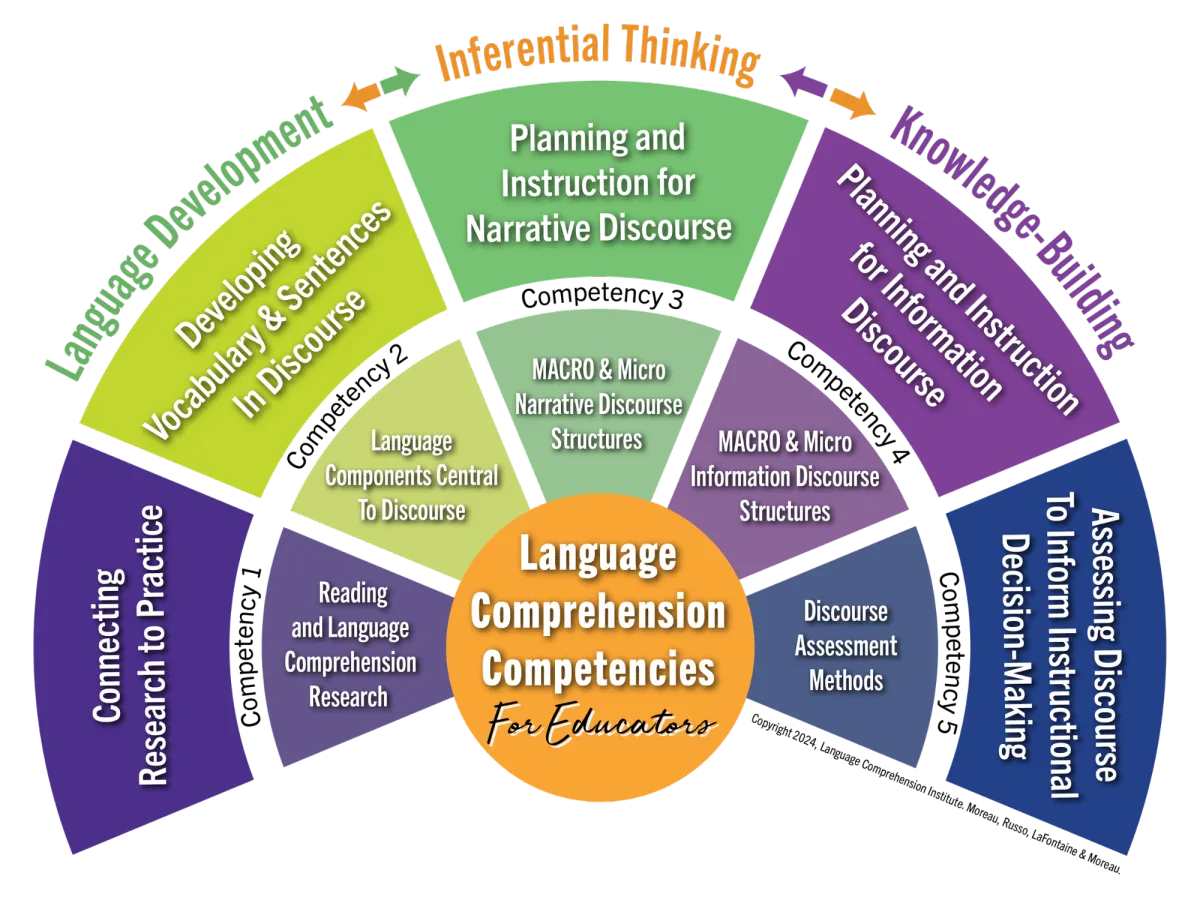
As districts deepen their implementation of the Science of Reading, the Language Comprehension Expertise Pathway™ directly addresses the language comprehension component of skilled reading; rooted in the five Langauge Comprehension Competencies developed by the Language Comprehension Institute.
The Pathway furthers educator expertise in the oral language, vocabulary, syntax, discourse, inferential thinking, knowledge-building, and perspective-taking processes students must integrate to construct coherent mental models of what they hear and read.
In this way, the Pathway helps districts extend their Science of Reading work beyond word recognition to the development of reading comprehension.
Discourse Connects Sentence-Level Language
To Language & LIteracy Modes and
HIgher Order Language and Cognitive Skills
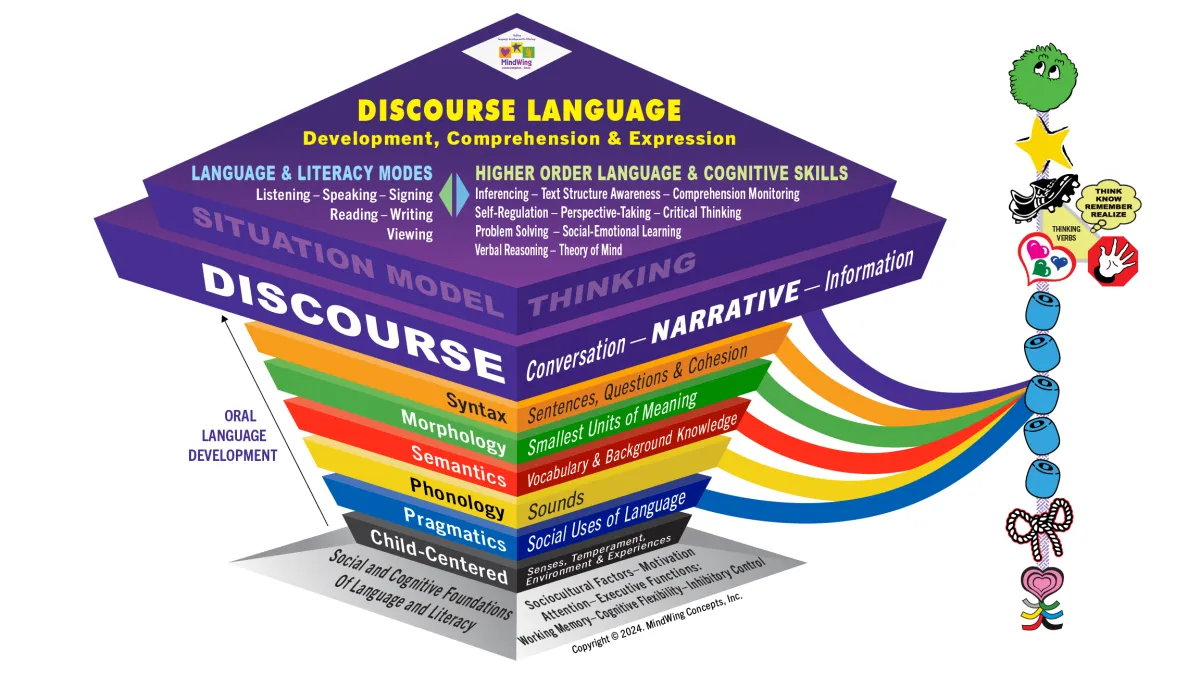
Productive discourse is essential because it places more of the cognitive lift in students’ hands; but it involves more than placing students in groups and asking them to turn and talk.
Students need the pragmatic skills to participate with others and the language structures to organize, connect, explain, and interpret ideas.
They must learn how the language components of vocabulary, syntax, cohesive ties, text structure, inference, and perspective work together to communicate a larger message.
The Pathway Works Within Exisiting Curricula, Programs, and Initiatives
The Language Comprehension Expertise Pathway™ is curriculum- and program-agnostic. It does not replace a district’s ELA, science, social studies, writing, or intervention programs or initiatives. It provides the connective instructional layer beneath them: a shared language and framework that educators and students can use across classrooms, grade levels, subjects, and instructional materials.
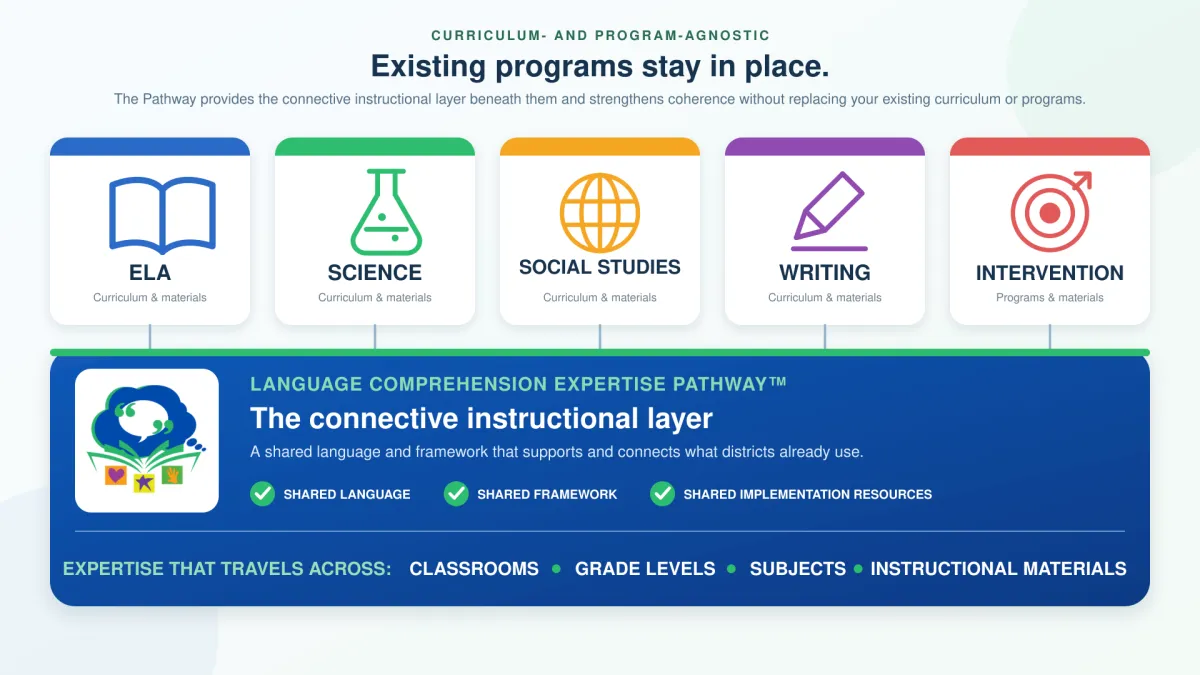
The Pathway makes this often-invisible cognitive work visible and teachable.